Limited offer50% off your first month: the $99 plan for $4924 hours onlySee plans

OXYGENvsApollo

Oxygen vs Apollo Apollo makes every LinkedIn step a manual task. Oxygen runs them for you.

Oxygen runs LinkedIn steps on its own and keeps tables, sequences, workflows and a CRM with deals in one workspace, from $49 a month with no seat per user. Apollo leads on its own 240M-contact database, two-way CRM syncs, SOC 2 and ISO 27001, and a free plan that sends.

Used by B2B GTM teams at

  • Sympower
  • SignalFisher
  • Flino
  • FIOR
  • Grasp
  • Growth Alliance
  • Atticus

Oxygen vs Apollo: the short answer

Choose OXYGEN if

  • You want LinkedIn visits, invites and messages to run on their own, where Apollo makes each one a manual task for a rep.
  • You build lists in tables with relations, formulas and enrichment columns, and want them now; Apollo's Sheets is an invite-only beta.
  • You buy inboxes for outreach and want them at $4 a month with warm-up, against about $20 in Apollo credits.
  • You want deals, objects you define and every reply in one CRM; Apollo's own help says it works alongside HubSpot rather than replacing it.

Choose Apollo if

  • You want a 240M-contact database inside the tool you prospect from.
  • Salesforce, HubSpot, Pipedrive or Zoho is your CRM and contacts must sync both ways.
  • Your security review asks for SOC 2 Type 2, ISO 27001 or SSO.
  • You want to start sending from a free plan: 2 sequences and 250 emails a day.
Best fit by team
TeamPickWhy
A sales team of 3 on email and LinkedInOXYGEN$118.50 a month against $195, and LinkedIn steps run on their own.
RevOps building lists and automationsOXYGENTables with relations and formulas, and workflows on webhooks, schedules and events.
SDRs who live on the phoneApolloA dialer with call recording, and power and parallel dialing as an add-on.
A team that needs a big contact databaseApollo240M contacts and Bombora intent topics inside the tool.
A team testing outbound before it buysApolloApollo's free plan sends 250 emails a day; Oxygen's free plan cannot send.

Why switch from Apollo to Oxygen

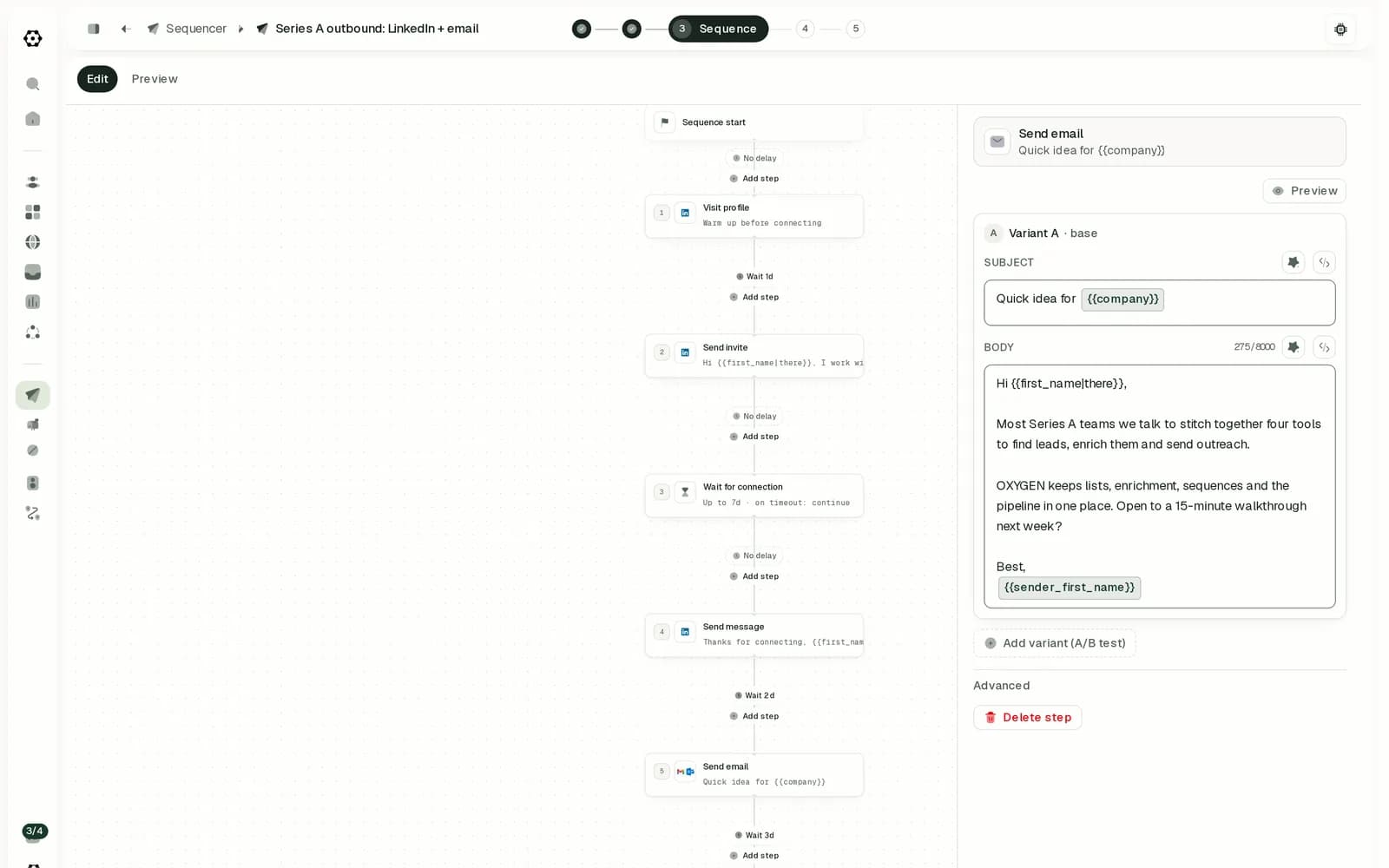
An Oxygen sequence that visits a LinkedIn profile, sends an invite, waits for the connection, sends a message and then an email

Every LinkedIn step is a manual task

Apollo prepares each LinkedIn request or message, and a rep sends it by hand, on every plan. Oxygen runs visits, invites, messages and InMail in the cloud at $34 a month per account, so a sequence keeps moving.

LinkedIn automation in detail
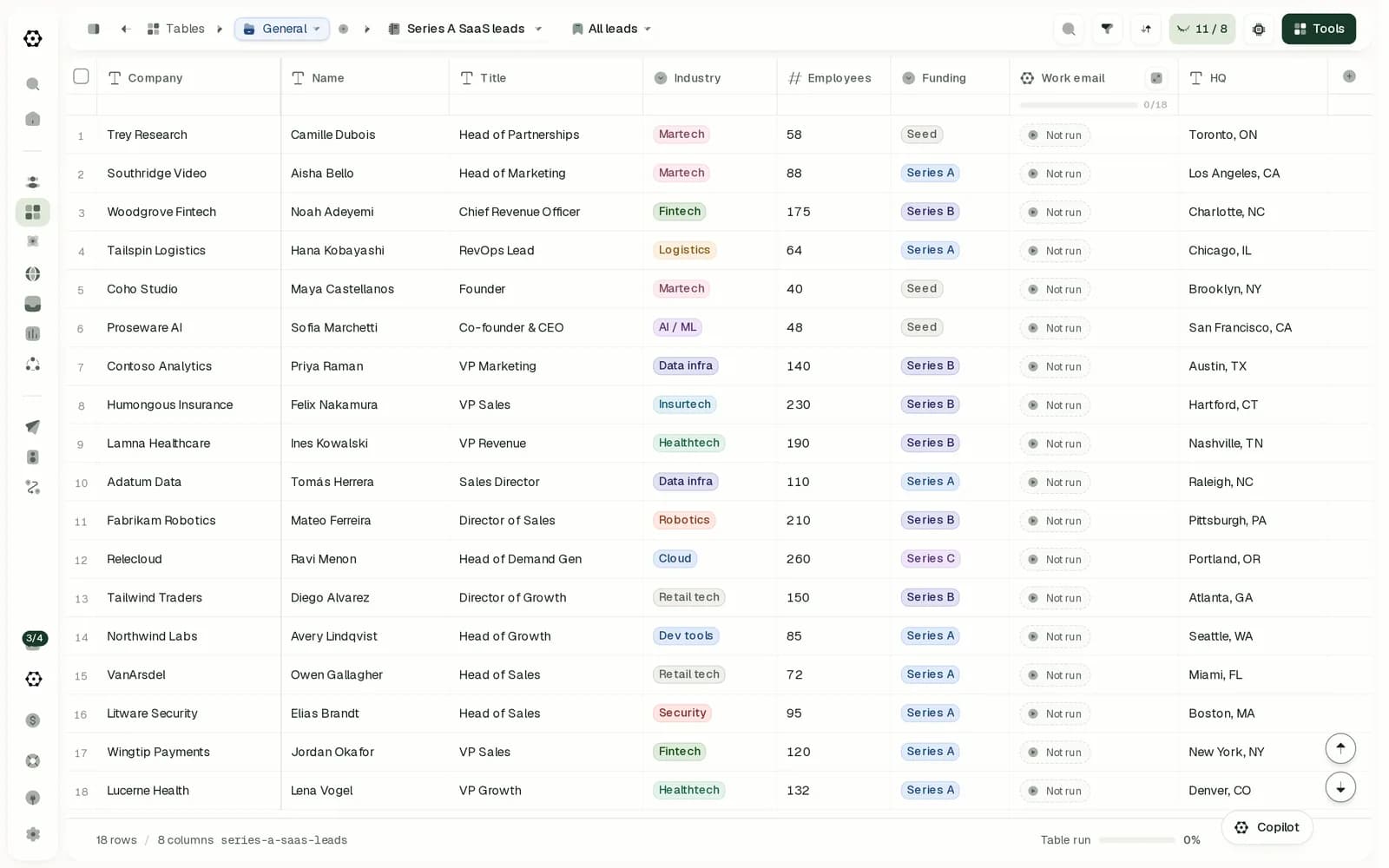
An Oxygen table of 18 leads with company, name, title, industry, employees, funding, a work email column and HQ

Spreadsheet tables are still an invite-only beta

Apollo's Sheets, with AI, formula and lookup columns, is invite-only, and its saved lists have no relations or formulas. Oxygen gives every workspace tables with relations, formulas and enrichment columns, up to 1,000,000 rows each.

Tables for lead lists in detail

Seats and expiring credits add up

Apollo charges per seat, $65 a month on Basic, and lookups draw on credits that expire each cycle. Oxygen is one plan per workspace from $49 a month with no seat per user, so a new person costs nothing until they connect an account.

“every action consumes credits, and all in all, it can consume quite a lot of credits and money”

Pricing model in detail

A managed mailbox costs about $20 a month

An Apollo Google mailbox costs 800 credits a month, about $20 at its add-on rate. Oxygen's Google Workspace and Microsoft 365 inboxes cost $4 a month with warm-up included.

Email deliverability in detail

Oxygen vs Apollo at a glance

Oxygen and Apollo compared on 13 criteria
CriterionOXYGENApollo
Lead data and signals
Lead data from multiple vendorsHow many providers the email waterfall tries on the vendor's credits, and how lookups are billed.Email and phone waterfalls across 17 and 13 providers, on plan credits or own keys from the $99 plan. Managed finders charge on a hit; email checks bill even on a miss. EvenIts own database first, then a waterfall of 20+ partners on its credits from Basic, with your own provider keys optional. An email costs 1 credit, a mobile number 8, out of 2,500 credits per seat a month on Basic. Even
Tables for lead listsSpreadsheet tables for building lists: relations, formulas, enrichment columns and rows per table.Tables you edit like a spreadsheet, with relations between tables, formula columns, and enrichment and AI columns that fill every row. Up to 1,000,000 rows per table on the $49 plan and 3,000,000 from the $199 plan. AheadSheets, a spreadsheet with AI, formula, lookup and enrichment columns, is an invite-only beta. Saved lists group records without relations or formulas.
Own contact databaseContacts in the vendor's own database, searchable in the product.No contact database of its own. Searches run through data providers on credits, and through Apollo's database on your own Apollo key.240M contacts and 30M companies in its own database, searchable on every plan, with emails at 1 credit and mobile numbers at 8. Ahead
Email, LinkedIn and more channels
Email deliverabilityWarm-up, inbox buying, placement tests, rotation, send limits, bounce protection, then the price of an inbox.Google Workspace and Microsoft 365 inboxes at $4 a month with warm-up included, or a Microsoft tenant at $40 a month for up to 100 inboxes. Placement tests from $1 an inbox a month, inbox rotation, daily limits per mailbox and a bounce auto-pause. AheadWarm-up for one mailbox per seat, then 200 credits each. Google mailboxes at 800 credits a month, about $20 at its add-on rate. Placement tests, rotation, daily limits and a pause at a 6% bounce rate.
LinkedIn automationWhich steps run on their own, how the account connects, and what 2 senders cost a month.Runs in the cloud with no browser extension: visits, invites, messages, InMail, follows, likes and comments. $34 a month per connected account, every action included. AheadEvery LinkedIn step is a manual task on every plan: Apollo prepares the request or message and a rep sends it on LinkedIn. The Chrome extension is for prospecting.
Sequences and inboxMixed channels, branches, A/B tests, reply stops on every channel, one inbox, AI replies.One sequence mixes email, LinkedIn, WhatsApp and call tasks, branches on connection state, signals or lead data, tests up to 26 versions of a step, and stops a lead when they reply on any channel. Replies land in one inbox with AI triage and drafted answers. AheadEmail, calls and LinkedIn tasks in one sequence, A/Z tests on Professional, a reply ends the sequence, and one inbox with sentiment tags. Branching lives in workflows, not in sequences.
LinkedIn content publishingScheduling posts, approving them before they go out, and reading their analytics.Schedule LinkedIn and X posts, approve each before it goes out, and read LinkedIn and X analytics. AheadNo post scheduling, approvals or post analytics; workflows can call a third-party LinkedIn action that creates a post.
CRM and integrations
Built-in CRMDeals, a pipeline and custom records in the same workspace, and what they cost.Companies, people, deals and objects you define, a deals pipeline, and an activity timeline where replies land. Free on every plan, the free one included. AheadContacts, accounts, deals on a pipeline and an activity timeline on every plan. Custom objects only as read-only Salesforce copies on the Organization plan.
Works with your stackWhich CRMs sync both ways. Push-only syncs and imports do not count.Two-way sync with HubSpot, one-way sync to Attio and an import from Pipedrive. No Salesforce sync. Pushes leads into Instantly, Smartlead, lemlist and HeyReach campaigns, and has a public API and webhooks.Two-way sync with Salesforce and HubSpot, and contacts and accounts both ways with Pipedrive and Zoho, one CRM at a time. Attio and Close only through workflow actions. Ahead
Workflows and AI
Workflow automationAutomations on schedules, webhooks and events, with approvals and run logs, built in.Built in: schedules down to every minute on paid plans, webhooks, API calls and 80 workspace events as triggers, with approval steps, retries and a log of every run. AheadWorkflows on schedules and events such as job changes or website visits, with branches, approval steps and a run history; 5 per team on Basic. No incoming webhook trigger.
Pricing and security
Pricing modelWhat you pay for, and the monthly list price for three common setups.One plan from $49 a month per workspace, paid in credits, with no seat per user. A LinkedIn account uses $34 of credits a month. AheadPer seat: Basic $65 a month or $49 yearly, Professional $99 or $79, Organization $119 yearly with 3 seats minimum. Credits are pooled and expire each cycle.
Security and complianceAudits, SSO and the documents a security review asks for.A public DPA and subprocessor list. No SOC 2 report, ISO 27001 certificate, SSO or public status page.SOC 2 Type 2, ISO 27001:2022, SSO on Organization, a public DPA, a public subprocessor list and a status page. Ahead
Free plan and trialWhat you can use before paying, and for how long.A free workspace with 250 credits once, the CRM, tables and workflows, and no time limit. Sending needs a paid plan.A free plan that sends: 2 sequences, 250 emails a day from one Gmail mailbox and 75 credits a month. A 14-day trial of Basic or Professional. Ahead

Across 13 criteria: OXYGEN ahead on 8 (tables, deliverability, LinkedIn, sequences, CRM, workflows, price, content publishing), Apollo ahead on 4 (CRM syncs, security, own database, free plan), even on 1. How we compared

Lead data and signals: Oxygen vs Apollo

Where does Apollo get its lead data, and how does Oxygen's compare?

From its own database of 240M contacts first, then a waterfall of 20+ partners on its credits, with your own provider keys optional. Oxygen has no database of its own; its waterfalls try 17 email and 13 phone providers. Even on providers; Apollo starts with more data.

Does Apollo have tables for building lead lists?

In beta. Apollo's Sheets has AI, formula, lookup and enrichment columns, but it is invite-only, so it does not count here, and its saved lists group records without relations or formulas. Oxygen's tables give every workspace all of that, with up to 3,000,000 rows each from the $199 plan.

How big is Apollo's own contact database?

240M contacts and 30M companies on its own pages, with emails at 1 credit and mobile numbers at 8. Oxygen has no database of its own; it searches through data providers, and through Apollo's database itself on your own Apollo key from the $99 plan.

Email, LinkedIn and more channels: Oxygen vs Apollo

How does Apollo protect deliverability, and what does Oxygen include?

With all six parts Oxygen ships: warm-up, bought mailboxes, placement tests, rotation, daily limits and a bounce pause at 6%. The difference is price: an Apollo Google mailbox costs 800 credits a month, about $20 at its add-on rate, against $4 on Oxygen with warm-up included.

Does Apollo automate LinkedIn, and what does a sender cost?

No. Every LinkedIn step in Apollo is a manual task: it prepares the request or message and a rep sends it on LinkedIn. Oxygen runs visits, invites, messages, InMail, likes and comments in the cloud at $34 a month per account, so a sequence keeps moving without anyone clicking through tasks.

Can one Apollo sequence mix channels, and where do replies land?

Yes: email, calls and LinkedIn tasks in one sequence, replies in one inbox with sentiment tags, and a reply ends the sequence. Its sequences run straight through, with branching kept in Apollo's workflows. Oxygen branches inside a sequence on connection state, signals or lead data. See how sequences work.

Can Apollo schedule LinkedIn posts?

No. Apollo has no post scheduling, approvals or post analytics; its workflows can only call a third-party LinkedIn action that creates a post. Oxygen schedules LinkedIn and X posts, publishes each one only after it is approved and reads their analytics. See how publishing works.

CRM and integrations: Oxygen vs Apollo

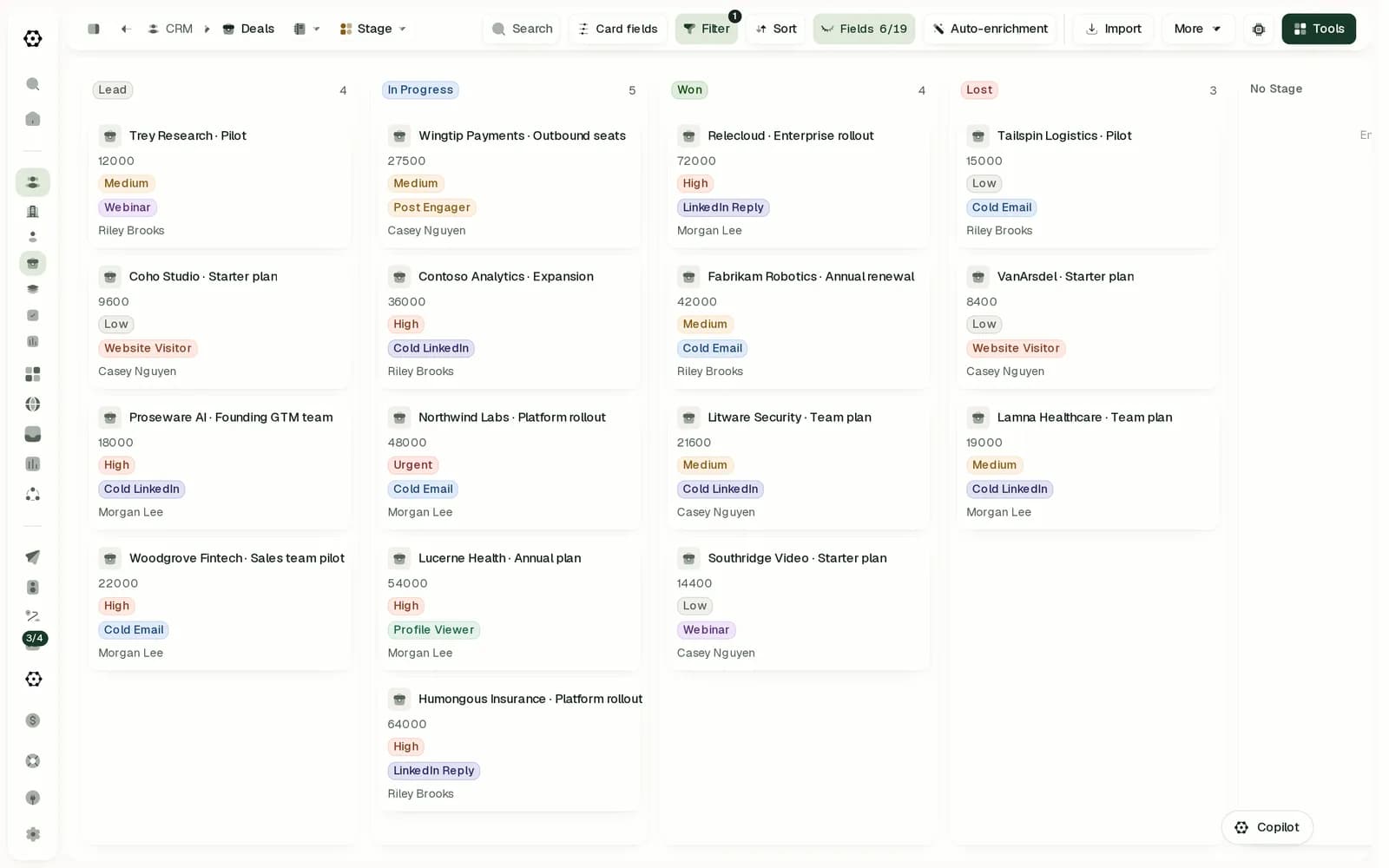
The Oxygen deals board with deals in Lead, In Progress, Won and Lost
Deals on the pipeline board, in the same workspace as the lists and the sequences.

Does Apollo have a CRM, and how does Oxygen's compare?

Partly. Apollo has contacts, accounts and a deals pipeline on every plan, and its own help says it works alongside HubSpot rather than replacing it. Custom objects exist only as read-only Salesforce copies on the Organization plan. Oxygen's CRM lets you define objects and logs every reply on the timeline.

Which CRMs does Apollo sync with, and which does Oxygen?

Apollo syncs both ways with Salesforce and HubSpot, and contacts and accounts with Pipedrive and Zoho, one CRM at a time. Oxygen syncs both ways with HubSpot, pushes to Attio and imports from Pipedrive, with no Salesforce sync. If Salesforce runs your pipeline, Apollo fits better. Oxygen's connections are on its integrations page.

Workflows and AI: Oxygen vs Apollo

Can Apollo automate work outside a sequence?

Yes, and well: Apollo's workflows run on schedules and events such as job changes or website visits, with approval steps and a run history, but none starts from an incoming webhook. Oxygen's workflows start from webhooks, API calls, schedules or 80 workspace events, with retries on every run.

Pricing and security: Oxygen vs Apollo

How does Apollo pricing compare with Oxygen for a small team?

Oxygen costs less in all 3 setups below. Apollo charges per seat, $65 a month on Basic, and its LinkedIn steps stay manual on every plan. Oxygen is one plan per workspace paid in credits, so a third sender adds $34 a month for the account. Full prices are on Oxygen pricing.

Is Apollo SOC 2 compliant, and is Oxygen?

Apollo is: SOC 2 Type 2, ISO 27001:2022, SSO on Organization, a public DPA, a subprocessor list and a status page. Oxygen publishes a DPA and a subprocessor list, and has no SOC 2 report, ISO certificate, SSO or status page. If your security review needs them, Apollo passes and Oxygen does not.

Does Apollo have a free plan, and does Oxygen?

Both have one, and Apollo's can send: 2 sequences, 250 emails a day from one Gmail mailbox and 75 credits a month. Oxygen's free workspace comes with 250 credits once, the CRM, tables and workflows, and needs a paid plan to send.

Oxygen vs Apollo pricing for 1 and 3 senders

Monthly list prices on monthly billing
SetupOXYGEN a monthApollo a month
1 person on email and LinkedIn$49the $49 plan$65Basic, 1 seat, LinkedIn as manual tasks; $49 billed yearly
3 people on email and LinkedIn$118.50the $99 plan plus 1,500 credits in top-ups$195Basic, 3 seats; $147 billed yearly
A team on email only, 3 inboxes$49the $49 plan$99Professional, 1 seat for 3 mailboxes; $79 billed yearly

Switching from Apollo to Oxygen, or running both

Carries over

  • Contacts and accounts, exported from Apollo as CSV into an Oxygen table or the CRM.
  • Your Google and Microsoft mailboxes, connected to Oxygen.
  • Apollo's database itself, searchable from Oxygen on your own Apollo key from the $99 plan.

Rebuilt in Oxygen

  • Sequences and workflows, which you rebuild in Oxygen.
  • Call recordings and dialer history, which stay in Apollo.
  • Unused Apollo credits, which expire at the end of each cycle.

Run both while you decide: email and call your Apollo lists from Apollo. Run LinkedIn steps in Oxygen, on lists you build there with its tables and CRM. Oxygen can also search Apollo's database on your own Apollo key from the $99 plan. Keep those contacts out of LinkedIn steps, because Apollo's terms bar "using any API with LinkedIn automations".

Oxygen vs Apollo FAQ

Is Oxygen cheaper than Apollo?

Yes, in the 3 setups on this page, on monthly billing. One person on email and LinkedIn costs $49 on Oxygen and $65 on Apollo Basic; 3 people cost $118.50 against $195. For email only with 3 inboxes, Oxygen's $49 includes the inboxes; Apollo needs a Professional seat or 3 Basic seats.

Does Apollo automate LinkedIn?

No. Apollo's help center says LinkedIn tasks need to be completed manually: it prepares the connection request or message, and a rep sends it on LinkedIn. Its Chrome extension is for finding and saving prospects. Oxygen runs LinkedIn steps in the cloud, with no extension and no manual task queue.

Can I use Apollo's data inside Oxygen?

Yes. Oxygen searches Apollo's people and company database on your own Apollo key from the $99 plan, and enriches companies through Apollo on Oxygen credits. Apollo's terms of service bar "using any API with LinkedIn automations". So keep contacts found on your Apollo key out of automated LinkedIn steps, in Oxygen or any other tool. The terms also say you "may not seat-share or time-share" a seat.

Does Apollo charge per seat?

Yes. Every user needs a seat, all seats on an account share one plan, and Basic costs $65 a month. Credits are pooled across seats and expire at the end of each cycle. Oxygen has no seats: one plan per workspace, paid in credits, so adding a person adds nothing until they connect an account.

Can I move from Apollo without losing my data?

Your contacts, accounts and mailboxes move; sequences and workflows are rebuilt. Export contacts and accounts as CSV, import them into an Oxygen table or the CRM, and connect your mailboxes. Unused Apollo credits expire at the end of each cycle, so time the switch to your renewal date.

When is Apollo the better choice?

When you want a large contact database inside your prospecting tool, Salesforce or another CRM synced both ways, a SOC 2 and ISO 27001 security review, a free plan that sends, or a dialer at the center of your outreach. On the other rows of this comparison, Oxygen leads or the two are even.

How we compared Oxygen and Apollo

We make OXYGEN, so read this as an interested comparison. Every comparison on this site scores both products on the same rubric, and a fixed rule decides each row from the facts, never a writer. This page shows the 13 criteria that decide a choice between OXYGEN and Apollo. We also scored signals, extra channels and AI and left them out; Apollo leads on none of them. Apollo facts come from Apollo's own pages, checked on the dates below; OXYGEN facts and prices come from the product and its live price list.

Sources for Apollo, checked between October 15, 2026 and October 28, 2026

Apollo is a trademark of its owner and is not affiliated with OXYGEN. Something out of date? Tell us.