Lead data and signals: Oxygen vs Clay
Where does Clay get its lead data, and how does Oxygen's compare?
Clay leads here: on every plan, Free included, its credits buy data from 150+ providers, and its directory lists more than 20 work-email finders. Your own keys work on every plan too. Oxygen's waterfalls try 17 email and 13 phone providers and take your own keys from the $99 plan.
Does Clay have tables for building lead lists?
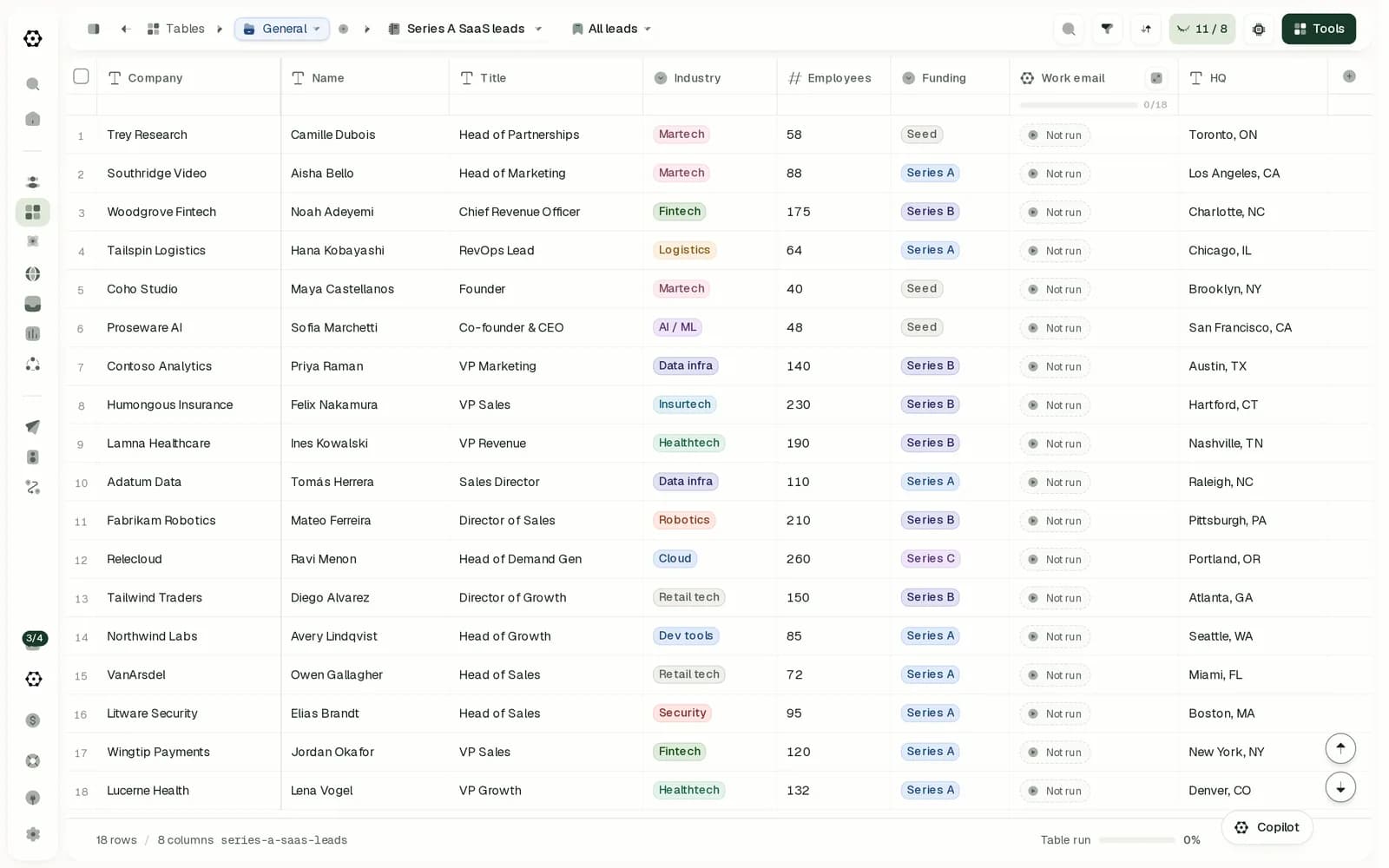
Both are built on tables with lookups, formulas and AI columns, and tables are Clay's core product. The difference is size: Clay caps a table at 50,000 rows on Launch and Growth and 200 on Free, while Oxygen's tables hold up to 1,000,000 rows on the $49 plan and 3,000,000 from the $199 plan.
Does Clay track buying signals, and which does Oxygen capture?
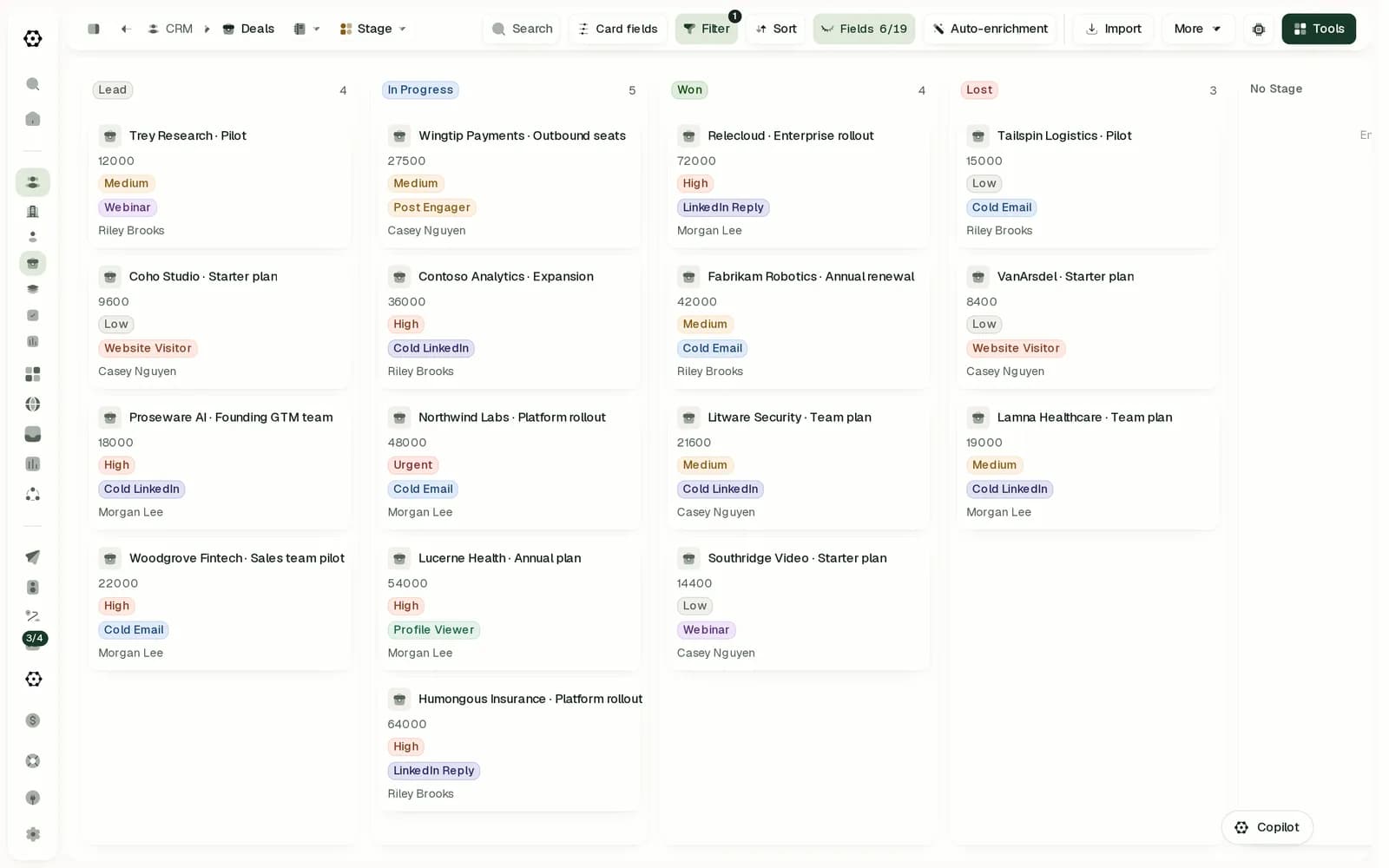
Both can enroll a lead when a signal fires. Clay tracks more kinds, from topic intent to web intent on Growth, each charged per result or per record checked. Oxygen reads profile viewers, new followers and post reactions from your LinkedIn accounts at no extra cost, which decides the row. It also takes website visits from RB2B, which support connects, or from another visitor tool.
How big is Clay's own contact database?
Yes: search over 900M people, 70M companies and 300M jobs on every plan, with filtering free; its DPA says the data comes from third-party providers. Oxygen has no database of its own; it searches through data providers on credits, and through Apollo's database on your own Apollo key from the $99 plan.









 Choose OXYGEN if